
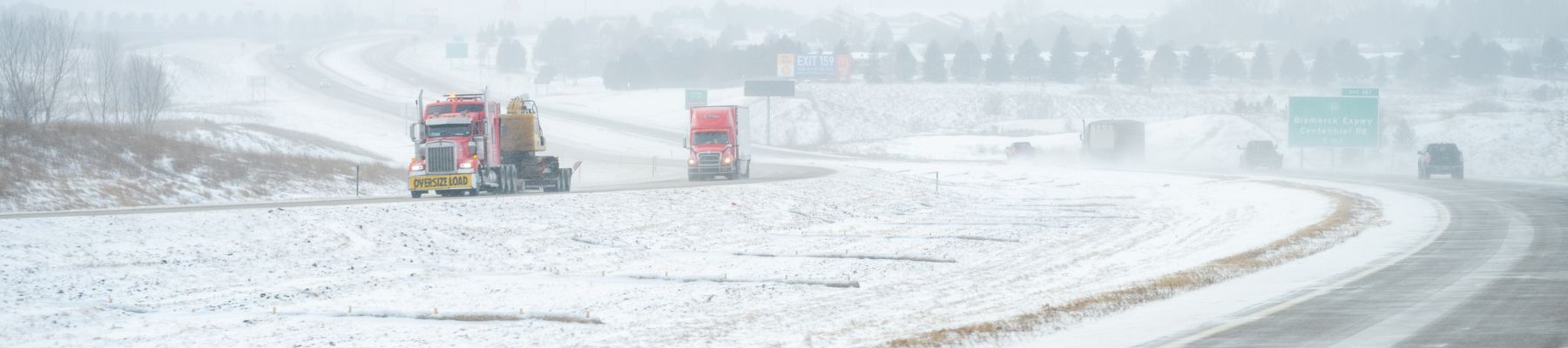
Winter driving can be challenging, even for experienced drivers. Snow, ice, wind and extreme cold can quickly create hazardous road conditions. Preparing your vehicle, adjusting your driving and planning ahead can help prevent crashes and keep you safe.
Winter conditions can:
- Reduce traction and visibility
- Increase stopping distance
- Cause sudden equipment failures
- Leave drivers stranded in extreme cold
Slowing down and staying alert are critical during winter travel.
- Slow down and allow extra stopping distance.
- Avoid using cruise control on icy or snowy roads.
- Be cautious around snowplows and large trucks – snow spray can reduce visibility.
- Stay focused and avoid distractions.
- If you skid, ease off the accelerator and steer in the direction you want to go.
Before winter travel, make sure your vehicle is ready:
- Tires are properly inflated and have good tread.
- Battery is in good condition.
- Headlights, signals and wipers are working.
- Winter-grade washer fluid is filled.
- Floor mats are secured and not interfering with pedals.
- Check road and weather conditions before leaving.
- Let someone know your route and expected arrival time.
- Keep your fuel tank at least half full (or ensure your EV is charged).
- Dress in warm layers and bring blankets and essentials.
- Carry a basic winter survival kit.
- Stay with your vehicle.
- Make your vehicle visible.
- Clear snow from the exhaust pipe.
- Run the engine only for short periods to stay warm.
Avoid bulky coats under car seat harnesses. Use thin layers and secure blankets after the harness is snug.
- Always wear a seat belt.
- Always drive distraction-free and sober.
- Adjust speed for road and weather conditions.
Contact us for education materials, training, or other resources.