
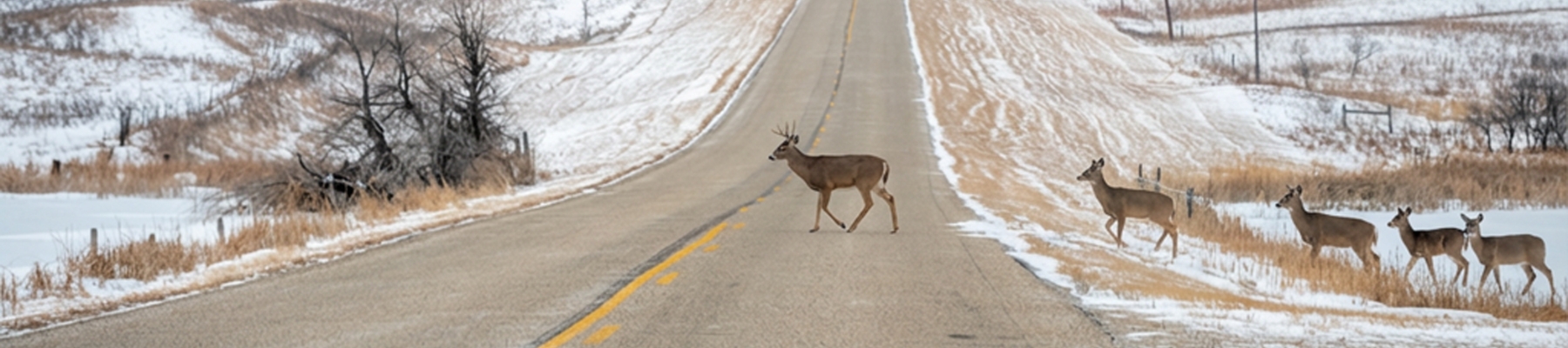
Watch for wildlife on the road. Crashes involving wildlife, especially deer, can cause serious injuries, vehicle damage and even death. Slowing down, staying alert and watching for wildlife helps protect you, your passengers and others on the road.
While wildlife crashes can occur year-round, the most common time for deer crashes is in November. They happen most often:
- Early morning (5–7 a.m.)
- Evening and nighttime (6–11 p.m.)
These times coincide with low light and peak animal movement.
Wildlife is more likely to be near roadways:
- At dawn and dusk
- In rural areas
- Near trees, shelterbelts, rivers, sloughs and open fields
- In posted wildlife crossing zones
If you see one animal, expect more, deer often travel in groups.
- Always wear a seat belt – it’s your best protection in a crash.
- Slow down, especially during high-risk times.
- Use high beams when possible to improve visibility.
- Scan ditches and roadsides for movement or eye shine.
- Brake firmly if an animal enters the roadway.
- Avoid swerving, which can lead to loss of control or rollover crashes.
- Stop safely and check yourself and passengers for injuries.
- Call 911 if anyone is injured or if there is a fatality.
- If it’s safe, move the animal off the roadway.
- If you can’t move it, contact:
- North Dakota State Radio: 800-472-2121
- Or your local NDDOT district office
Contact us for education materials, training, or other resources.