
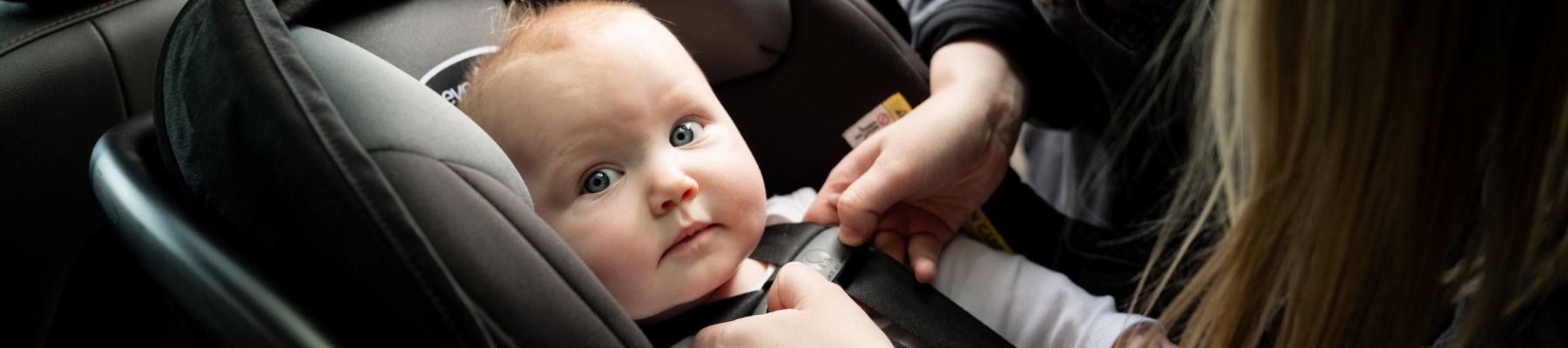
When used correctly, car seats reduce the risk of fatal injury by 71% for infants and 54% for toddlers. For maximum safety, North Dakota safety experts recommend children younger than 13 always ride in the back seat.
In 2024, 70% of car seats checked in North Dakota were found to be installed incorrectly. Proper installation is critical to protecting your child in the event of a crash.
North Dakota law mandates that all children be properly restrained based on their age and size (NDCC 39-21-41.2):
- Under Age 8: Must ride in an approved child restraint (car seat or booster seat).
- Height Exception: Children under 8 who are at least 4' 9" tall may use a properly fitted seat belt.
- Ages 8–17: Must be secured in either a seat belt or an appropriate child restraint.
- Penalty: $25 (NDCC 39-06.1-06. section 2, part c)
Need help with installation? Certified Child Passenger Safety Technicians (CPST) are available across North Dakota to inspect your seat for free.
To find a technician or locate a local car seat check event, contact the North Dakota Department of Health and Human Services at 800-472-2286 or view the ND Child Passenger Safety Map.
The Four Stages of Child Passenger Safety
Children should ride rear-facing as long as possible, usually until they reach the maximum height or weight allowed by the manufacturer.
- Commonly used from 4 lbs up to 35+ lbs.
- Ensure the child’s head is at least 1 inch below the top of the seat shell.
Once a child outgrows the rear-facing limits, they transition to a forward-facing seat with a 5-point harness.
- Use this seat until the child reaches the maximum harness weight (typically 40–100 lbs).
- Always use the top tether for forward-facing installations to limit head movement during a crash.
After outgrowing the harness, children should use a booster seat to ensure the vehicle's seat belt fits their smaller frame correctly.
- Continue using a booster until your child is at least 4 feet 9 inches tall.
- Booster seats are generally rated for children up to 80–100 lbs.
Children can move to a seat belt alone once it fits properly: the lap belt must lie across the upper thighs (not the stomach) and the shoulder belt must cross the chest (not the neck).
Resources
Contact us for education materials, training, or other resources.