
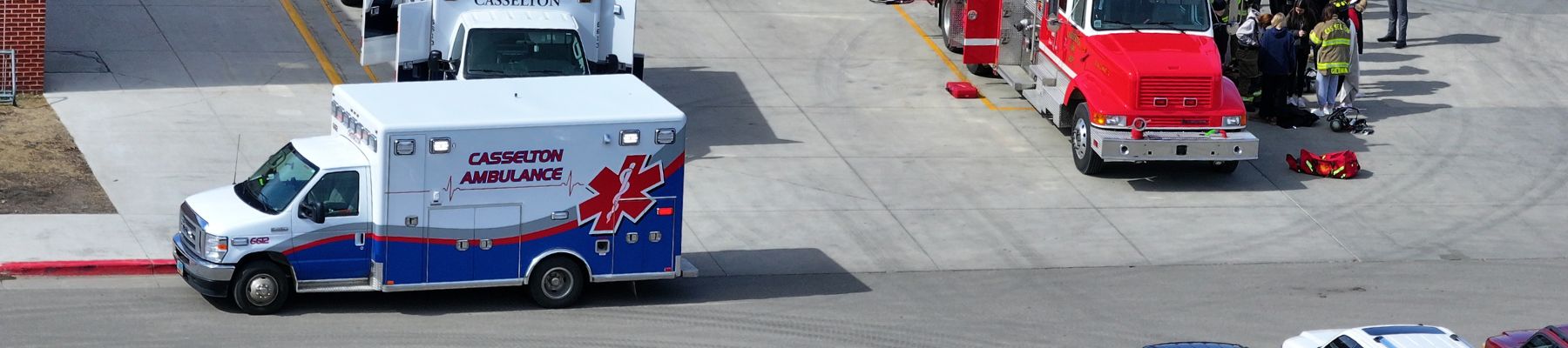
Safety doesn’t end when a crash happens. Post-crash care focuses on what happens after a traffic crash, from the moment a crash occurs to when injured people receive medical care. Timely response, secure crash scenes and effective emergency care can save lives and reduce the severity of injuries.
When a crash happens:
- Quick detection and response can improve survival.
- Proper medical care can reduce long-term disability.
- Safe scene management protects first responders and other drivers.
- Secondary crashes can be prevented through traffic control and awareness.
This is especially important in rural and Tribal areas, where longer distances and response times can affect outcomes.
Emergency Medical Services (EMS) play a critical role in post-crash care. EMS professionals provide immediate medical assessment, life-saving treatment and transport to appropriate medical facilities.
Their work includes:
- Rapid response to crash scenes.
- On-scene medical care.
- Safe and timely transport to hospitals or trauma centers.
- Coordination with law enforcement, fire services and hospitals.
Post-crash care also depends on keeping responders safe while they work near traffic. Drivers play an important role by:
- Slowing down when approaching a crash scene.
- Moving over into a non-adjacent lane when required by law.
- Staying alert and avoiding distractions near emergency vehicles.
Safe environments help first responders focus on saving lives.
Post-crash care is most effective when multiple parts of the system work together, including:
- Emergency responders
- Transportation agencies
- Health care providers
- Drivers who follow the rules of the road
Together, these efforts help reduce the impact of crashes and support recovery. Strong post-crash care protects lives and supports Vision Zero’s goal of zero traffic deaths and serious injuries.
Contact us for education materials, training, or other resources.